

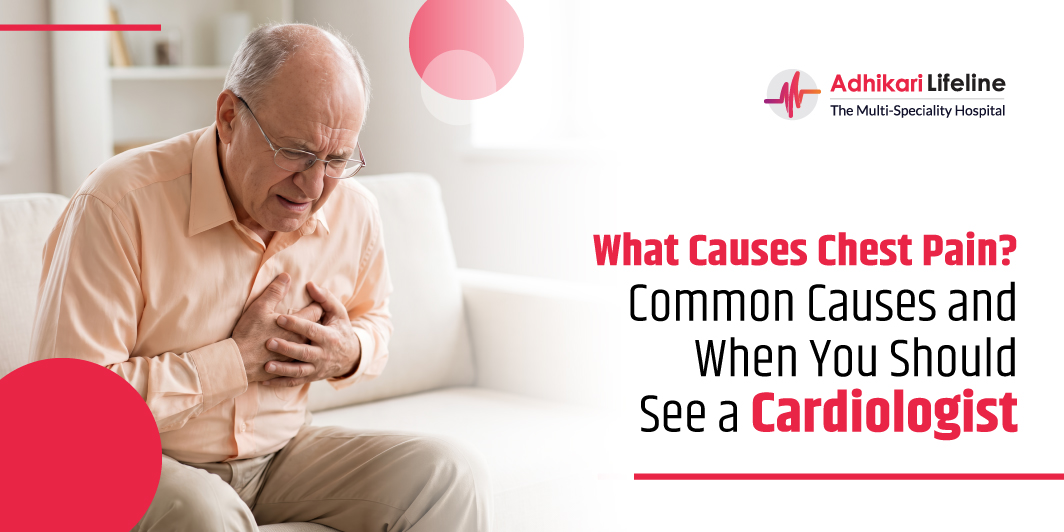
Picture this! You’re halfway up a flight of stairs, or maybe just sitting at the dinner table, when a tight, uncomfortable feeling grabs hold of your chest. Your first thought is probably panic. Your second thought, almost immediately after, is “wait, is this just gas?” That tug of war between two extremes, heartburn or heart attack, is something nearly everyone has felt at least once. And it’s exactly why understanding chest pain causes matters so much.
The truth is, what causes chest pain isn’t always obvious, and it can happen to anyone, whether men or women. It can be something as harmless as a bit of acidity after a heavy meal, or it can be your body’s way of telling you something is wrong with your heart. So here’s the one thing worth remembering before anything else: don’t brush it off as “just gas,” but don’t assume the worst either. Pay attention and get it checked.
What Are the Common Causes of Chest Pain?
The common causes of chest pain span a fairly wide range, and that’s part of what makes this topic confusing for most people.
Angina: Occurs when the heart muscle doesn’t receive enough oxygen-rich blood, usually because the arteries supplying blood to the heart have narrowed. It often causes chest tightness, pressure, or discomfort.
Heart Attack: Happens when blood flow to part of the heart becomes blocked, causing damage to the heart muscle. This is a medical emergency that requires immediate attention.
Cardiac Arrest: Occurs when the heart suddenly stops pumping blood effectively, causing a person to collapse, lose consciousness, and stop breathing normally. Unlike a heart attack, cardiac arrest does not typically begin with chest pain, although chest discomfort may occur beforehand. It requires immediate CPR and emergency medical assistance.
Anxiety and Panic Attacks: Can trigger chest tightness, a racing heartbeat, and breathlessness. These symptoms can closely resemble heart-related chest pain symptoms, making it difficult to tell the difference.
Lung Problems: Conditions such as pleurisy, pneumonia, or a blood clot in the lungs can also cause chest pain, often accompanied by difficulty breathing.
Well, there are many myths about chest pain and heart diseases among people. Even experienced doctors can’t always identify the cause based on how the pain feels alone. That’s why proper medical evaluation is essential to determine the cause and rule out serious conditions.
How to Know if Chest Pain Is Serious?
How to know if chest pain is serious really comes down to a handful of warning signs, and some are easier to miss than others. If the pain feels like pressure, squeezing, or a tight band across the chest rather than a quick, sharp sting, treat it seriously. Pain that travels to the arm, back, neck, or jaw is one of the clearest chest pain warning signs your body can give you.
Shortness of breath, cold sweats, dizziness, nausea, or fainting alongside chest discomfort are other red flags worth acting on. So is pain that comes out of nowhere, feels unusually severe, or just doesn’t match anything you’ve felt before.
You might wonder if it’s fine to wait a bit and see how things go. It really isn’t. The moment any of these signs show up, call for emergency help straight away rather than planning a cardiology visit for next week. With the heart, minutes genuinely matter, and acting fast can change how things turn out.
Is Chest Pain on the Left Side Always Related to the Heart?
Most people instinctively link chest pain on the left side with heart trouble, and only that side. It’s not quite that simple. Left-sided pain can just as easily come from a strained muscle, acidity, anxiety, or rib inflammation.
On the flip side, heart-related pain often sits right in the centre of the chest, and at times spreads more broadly instead of staying put on one side. So pain on the left deserves attention, sure, but pain that isn’t on the left doesn’t mean your heart is safe. The location alone just can’t tell you what’s really going on inside.
ALSO READ: 7 Simple Ways to Protect Your Heart Health
When Should You See a Cardiologist for Chest Pain?
Figuring out when to see a cardiologist for chest pain gets a lot easier once you factor in your own health background. If chest discomfort keeps coming back, shows up during exercise or exertion, or you notice breathlessness returning again and again, it’s time to book a cardiologist consultation.
This matters even more if you’re dealing with high blood pressure, diabetes, high cholesterol, smoking, or a family history of heart disease. Any of these raise your overall cardiac risk, which makes it worth getting checked even if the symptoms feel mild right now, not severe.
One distinction worth holding on to: a scheduled appointment works fine for ongoing or exertion-related discomfort. But sudden, severe, or emergency-type symptoms, the kind described above, need a hospital visit right away, not a slot booked for later in the week.
How Is Chest Pain Diagnosed?
The chest pain diagnosis process usually starts simply, with the doctor asking about your symptoms, what triggers them, and your general health history, followed by a physical exam.
From there, blood pressure monitoring helps gauge how much strain your cardiovascular system is under. An ECG test for heart health records the heart’s electrical activity, picking up irregularities in its rhythm. A 2D Echo uses ultrasound to look at the heart’s structure and how well it’s pumping. A lipid profile checks your cholesterol, which plays a long game in heart health over the years.
Here’s something worth keeping in mind though: no single test gives the complete picture on its own. If a heart attack is suspected, doctors will usually order urgent blood tests like cardiac troponin alongside these other checks. A normal lipid profile or 2D Echo, by themselves, cannot completely rule a heart attack out.
Get Timely Heart Pain Treatment in Boisar
At Adhikari Lifeline Multispeciality Hospital, our experienced cardiologists in Boisar work with the diagnostic facilities needed to properly evaluate chest pain, all available under one roof. That includes ECG monitoring, 2D Echo, lipid profile testing, and blood pressure monitoring.
For situations that genuinely can’t wait, we also run dedicated cardiac ambulances in Boisar, ready to respond quickly when timing matters most. Whether it’s a nagging discomfort you’ve been putting off checking, or something that just started and worries you, our team can help you figure out the right next step.
If chest discomfort has been showing up on and off, consider booking a cardiology consultation with us. And if you or someone around you shows signs of a possible cardiac emergency, don’t sit on it. Get immediate emergency assistance right away.
Emergency Ambulance Helpline: 7028774444
Available 24 hours a day. 7 days a week. Every day of the year.
Save this number and share it with your loved ones. We hope you never need to use it, but in an emergency, having it handy could make all the difference.
Leave A Comment