

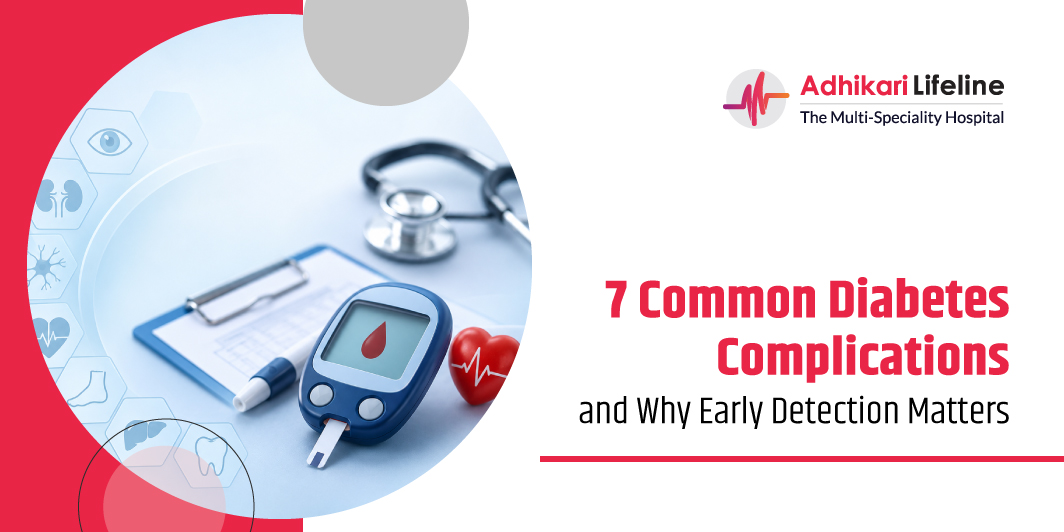
You may be checking your blood sugar regularly, taking your medicines on time, and trying to eat healthy. But managing diabetes involves more than just keeping your glucose levels in check. Over time, high blood sugar can affect your blood vessels, nerves, and other vital organs. This is how diabetes affects health, sometimes without you even noticing it.
At Adhikari Lifeline Multispeciality Hospital, we say that managing diabetes starts with understanding it better. Our Department of Endocrinology and Diabetology provides expert care for chronic diabetes and related complications. We believe that knowing about the common diabetes complications and recognising their early warning signs can help you make informed decisions, seek timely medical advice, and protect your health in the long run. Let’s understand the 7 common diabetes complications you should be aware of.
1. Heart Disease and Stroke
Your heart and brain depend on healthy blood vessels. When blood sugar stays high, it damages the inner walls of those vessels and lets fatty deposits stick to them. Over time, the arteries narrow and blood flow drops. That is why diabetes patients are more likely to have heart attacks and strokes than people without diabetes. High blood pressure and high cholesterol often come along with diabetes too, which adds to the strain.
Warning signs to watch for:
- Chest pain, pressure, or discomfort
- Breathlessness, even with light activity
- Sudden weakness or numbness, especially on one side of the body
- Difficulty speaking or slurred speech
- Pain spreading to the arm, jaw, or back
Here’s the catch: some heart events happen with no clear warning. So regular blood pressure, cholesterol, and blood sugar checks matter even when you feel fine. If sudden signs appear, get emergency help right away.
Learn More: How does Chronic Diabetes Affects Heart Health
2. Diabetic Kidney Disease (Diabetic Nephropathy)
Your kidneys are filters made of millions of tiny blood vessels. When sugar stays high for years, these vessels get damaged and start to leak. The kidneys then find it harder to clean waste from your blood. One early marker is albumin, a protein that leaks into the urine.
Here’s what makes this tricky: in the early stage, you may feel absolutely nothing. That is why testing matters more than waiting for symptoms.
Warning signs that may appear later:
- Swelling in the feet, ankles, or around the eyes
- Changes in urination, such as foamy urine or going more or less often
- Constant tiredness
- Nausea or loss of appetite
- Itchy skin
Simple urine albumin and kidney function tests can pick up changes early. Catching it early can help slow further damage. Ask your doctor how often you should get tested and what you can do to keep your kidneys healthy.
3. Diabetic Neuropathy (Nerve Damage)
Nerves carry messages between your body and your brain. High blood sugar harms the nerves and the tiny blood vessels that feed them, so signals get distorted or lost. The feet and legs are usually affected first because their nerves are the longest.
Warning signs to watch for:
- Tingling or “pins and needles”
- Numbness
- A burning feeling, often worse at night
- Sharp or shooting pain
- Reduced sensitivity to heat, cold, or touch
Here’s why this matters. If you can’t feel a small cut or blister, you may not treat it. Left alone, it can turn into a foot ulcer or a serious infection. Check your feet every day, wear well-fitting footwear, and keep your sugar in range. Also ask your Diabetologist if you need further tests.
4. Diabetic Retinopathy (Eye Damage)
The retina is the light-sensitive layer at the back of your eye. It turns light into signals your brain reads as images. It is full of tiny blood vessels, and high sugar can weaken or block them. These vessels may then leak fluid or bleed, and that slowly affects your vision.
Warning signs to watch for:
- Blurred or changing vision
- Dark spots or empty patches in your view
- Floaters, which look like small specks or strings drifting across your eyes
- Trouble reading or seeing clearly
But in the early stages, there are often no symptoms at all. Your vision can seem completely normal while changes are already starting. So get a dilated eye exam regularly, even if you see well. Timely detection and treatment can help protect your eyesight.
5. Gastroparesis
Gastroparesis means the stomach empties food into the small intestine more slowly than it should. In diabetes, this often happens when high sugar damages the nerves that control stomach movement, including the vagus nerve. The stomach muscles then don’t push food along properly, and meals sit there for too long.
Warning signs to watch for:
- Nausea or vomiting
- Bloating and stomach discomfort
- Feeling full after just a few bites
- Poor appetite
- Blood sugar that swings unpredictably
Because food and medicine may not line up, your sugar can go too high or too low, which makes diabetes management harder. If this sounds familiar, get evaluated. The right diet and treatment guidance can make eating comfortable again.
6. Infections
When sugar stays high, your immune system struggles to do its job. Germs find it easier to multiply, and the body takes longer to fight back. Skin, urinary tract, and foot infections are the most common. Poor blood flow and nerve damage can also slow healing, so even a small cut may take longer to close.
Warning signs to watch for:
- Redness, warmth, or swelling around a wound
- Pain or tenderness
- Pus or discharge
- Fever or chills
- Burning while passing urine
- A cut or sore that isn’t healing
Don’t wait and watch for too long. Early medical attention keeps a small problem from turning into a big one. Good blood sugar control and daily skin and foot checks also help lower your risk.
7. Dental Problems
Your mouth is part of how diabetes affects health, too. High sugar levels also raise the sugar in your saliva, which feeds the bacteria that cause gum infections and tooth decay. Diabetes can also reduce saliva, and a dry mouth makes things worse.
Warning signs to watch for:
- Swollen, red, or bleeding gums
- Dry mouth
- Persistent bad breath
- Tooth decay or sensitivity
- Loose teeth or gums pulling away from teeth
It works both ways. Gum infections can make blood sugar harder to control. Brush twice a day, floss daily, and visit your dentist regularly. Good oral care is a real part of diabetic care, so tell your dentist you have diabetes.
ALSO READ: 7 Tips for Healthy Living with Diabetes
Take Charge of Your Diabetes Before It Affects Your Overall Health
Good diabetes management is not only about keeping numbers in range. It is about protecting your heart, kidneys, eyes, nerves, and your overall health, so the common diabetes complications stay away. Many complications build up quietly, with no symptoms at first. By the time you notice something, some damage may already be done. Early treatment can prevent or delay further organ damage.
If you are living with diabetes, don’t wait for symptoms to appear before seeking help. At Adhikari Lifeline Multispeciality Hospital, Boisar, you can seek expert treatment and diabetic care. Consult an experienced diabetologist in Boisar, monitor your blood sugar regularly, follow your prescribed treatment, and keep up with routine health check-ups. A little attention today can make a big difference to your health in the years ahead. A personalized plan, healthy eating, regular physical activity, and prescribed medication all work together for long-term health. Complications are not inevitable. With good care, you can lower your risk significantly.
Book your consultation today!! and take a step towards healthier living.
Related Posts


Comments are closed.