

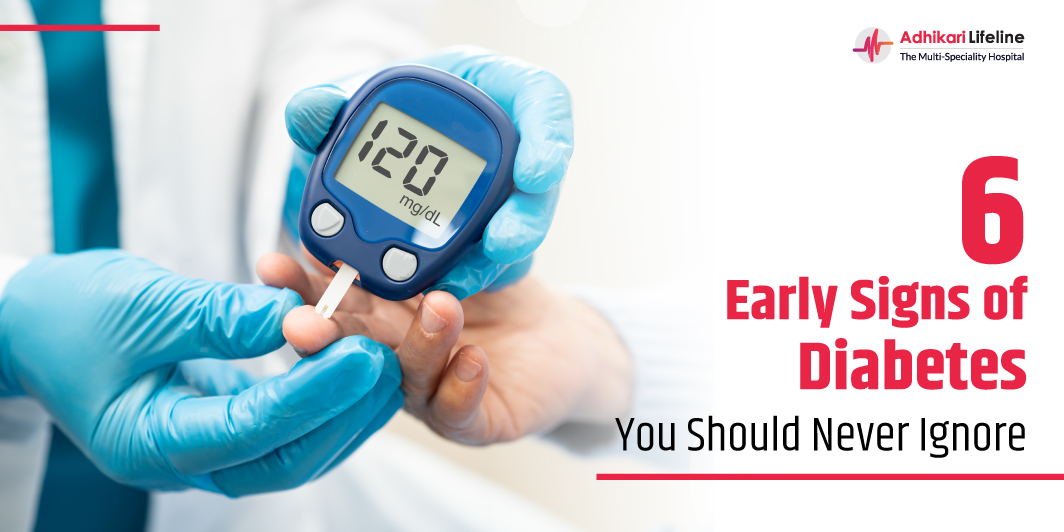
Many people don’t just discover they have diabetes during a medical emergency. Instead, the body starts giving small signals weeks or even months earlier. You may have noticed you’re refilling your water bottle more often, or making one too many trips to the washroom during a meeting. At first, it doesn’t seem like a big deal. Maybe it’s the weather, or maybe you just had a salty lunch. Many people brush it aside.
Here’s the thing. These small changes are often the body’s earliest way of telling you something is off with your blood sugar. That’s exactly why learning to recognise the early signs of diabetes matters so much. At Adhikari Lifeline Multispeciality Hospital in Boisar, our diabetologists often say that recognizing diabetes symptoms early can make all the difference between managing the condition with simple lifestyle changes and dealing with long term complications later. Let us walk you through 6 early signs of diabetes you should never ignore! But first, understand what diabetes really is?
What Is Diabetes?
Diabetes is a chronic metabolic disease where your body either doesn’t produce enough insulin or can’t use it properly. Insulin is the hormone that helps sugar (glucose) move from your blood into your cells, where it’s used for energy. When this process breaks down, sugar builds up in your bloodstream instead. According to the World Health Organization, India is home to the world’s second-largest population of people living with diabetes, with an estimated 90 to 101 million adults affected by the disease.
There are two common types. Type 1 diabetes usually develops early in life, when the body stops producing insulin altogether. Type 2 diabetes is more common in adults and develops gradually, often linked to lifestyle and weight. Regardless of the type, keeping blood sugar levels in a healthy range is essential. Left unmanaged, uncontrolled blood sugar can quietly damage your eyes, kidneys, nerves, and heart over time.
6 Early Signs of Diabetes You Should Never Ignore
Frequent Urination
When there’s too much sugar in your blood, your kidneys work overtime trying to filter it out. This pulls extra water along with it, which means more trips to the bathroom, including at night. If you find yourself waking up two or three times a night to urinate, it’s worth paying attention.
Excessive Thirst
Frequent urination and excessive thirst usually go hand in hand. As your body loses more fluid, it naturally tries to replace it, leaving you feeling thirsty even after drinking water. This can quietly turn into a cycle of dehydration that many people mistake for simply being in a hot climate.
Constant Hunger
Even after a full meal, do you find yourself hungry again within an hour or two? When insulin isn’t working properly, glucose can’t enter your cells the way it should. Your cells essentially stay “unfed,” even though there’s plenty of sugar circulating in your blood. This sends constant hunger signals to your brain.
Unexplained Weight Loss
This one surprises a lot of people. If you’re eating normally, or even more than usual, but still losing weight, it can be a sign your body isn’t able to use glucose for energy. Instead, it starts breaking down muscle and fat stores to make up the difference.
Blurred Vision
High blood sugar can cause the lens of your eye to swell, changing its shape temporarily. This often causes blurred vision. Patients often describe objects as looking hazy or out of focus, especially while reading or looking at screens. It tends to come and go with blood sugar swings, which is exactly why it’s easy to dismiss.
Slow Healing Wounds and Frequent Infections
Have you noticed a small cut or bruise taking much longer to heal than it used to? High blood sugar affects circulation and can weaken the immune system’s ability to fight infection. This means cuts, gum infections, and skin issues may take longer to clear up than they normally would.
Can Early Diabetes Symptoms Come and Go?
Yes, early signs of diabetes can come and go, which is one of the biggest reasons they’re overlooked. Blood sugar levels naturally fluctuate throughout the day, especially depending on meals, stress, and activity. So you might feel excessively thirsty one week and completely fine the next.
This on and off pattern often gives people a false sense of reassurance. But intermittent symptoms don’t mean the underlying issue has resolved. If anything, fluctuating prediabetes symptoms are your body’s way of showing that your blood sugar regulation is already under strain, even if it hasn’t become consistent yet.
When Should You Get Tested for Diabetes?
You should get tested for diabetes if you notice persistent symptoms, or if you fall into a higher risk category, even without symptoms. Several risk factors for diabetes make regular screening especially important:
- A family history of diabetes
- Being overweight or obese
- High blood pressure
- A history of gestational diabetes during pregnancy
- Age over 35
- A largely sedentary lifestyle
For diagnosis, doctors typically rely on a few standard tests. A fasting blood sugar test measures glucose after not eating for several hours. The HbA1c test gives an average of your blood sugar over the past two to three months. A random blood sugar test can be done at any time of day, and an oral glucose tolerance test measures how your body handles sugar after a sweetened drink. Your doctor will recommend the right combination based on your symptoms and risk profile.
Can Diabetes Be Prevented?
Yes, in many cases, particularly Type 2 diabetes, it can be prevented or significantly delayed through consistent lifestyle habits. A balanced diet low in refined sugar and processed food goes a long way in supporting healthy blood sugar levels. Regular physical activity, even a daily 30 minute walk, helps your body use insulin more effectively.
Maintaining a healthy weight reduces strain on your system, while regular health checkups help catch changes before they become serious. Managing stress and getting adequate sleep also play a bigger role than most people realise, since both directly affect hormone balance and blood sugar control. That’s why doctors recommend regular diabetes screening for people with known risk factors, even if they feel perfectly healthy.
Take Control of Diabetes Before It Takes Control of You
Early diagnosis saves lives. It’s easy to brush aside a little extra thirst or a slow healing scratch, but these small signals are worth listening to. The good news is that diabetes, when caught early, is very manageable.
Instead of searching your symptoms online and worrying in silence, it’s always better to consult a diabetes specialist. At Adhikari Lifeline Multispeciality Hospital, Boisar, we provide comprehensive diabetes diagnosis backed by advanced laboratory facilities. We focus on personalized diabetes management, practical lifestyle guidance, and ongoing follow up care, because we believe healthcare should always put the patient first.
If you or a loved one have noticed any of these signs, don’t wait. Book a diabetes check up in Boisar at Adhikari Lifeline Multispeciality Hospital today, and take the first step toward lasting health. As a trusted diabetes hospital in Palghar region, we’re here to help you understand your body and stay ahead of complications, not just react to them.
BOOK APPOINTMENT
Frequently Asked Questions
What are the first warning signs of diabetes?
The earliest warning signs of diabetes usually include frequent urination, excessive thirst, constant hunger, unexplained weight loss, blurred vision, and slow healing wounds. These symptoms often develop gradually, which is why many people overlook them until they become more noticeable or persistent.
Can diabetes develop without symptoms?
Yes, especially in the early stages of Type 2 diabetes. Many people have mildly elevated blood sugar for months or even years without noticeable symptoms. This is why routine screening, particularly for those with risk factors like family history or obesity, is so important for early detection.
Is frequent urination always a sign of diabetes?
Not always. Frequent urination can also be caused by urinary tract infections, certain medications, or simply drinking more fluids than usual. However, if it’s paired with excessive thirst, fatigue, or unexplained weight loss, it’s worth getting your blood sugar checked.
Which diabetes test is the most accurate?
The HbA1c test is widely considered the most reliable, since it reflects average blood sugar over two to three months rather than a single moment. It’s often used alongside a fasting blood sugar test for a more complete picture, especially during initial diagnosis.
Can lifestyle changes reverse prediabetes?
In many cases, yes. Prediabetes can often be reversed through consistent changes like a balanced diet, regular exercise, and weight management. Working closely with a physician to monitor progress makes these changes more effective and helps prevent progression to full diabetes symptoms and complications.
Leave A Comment