

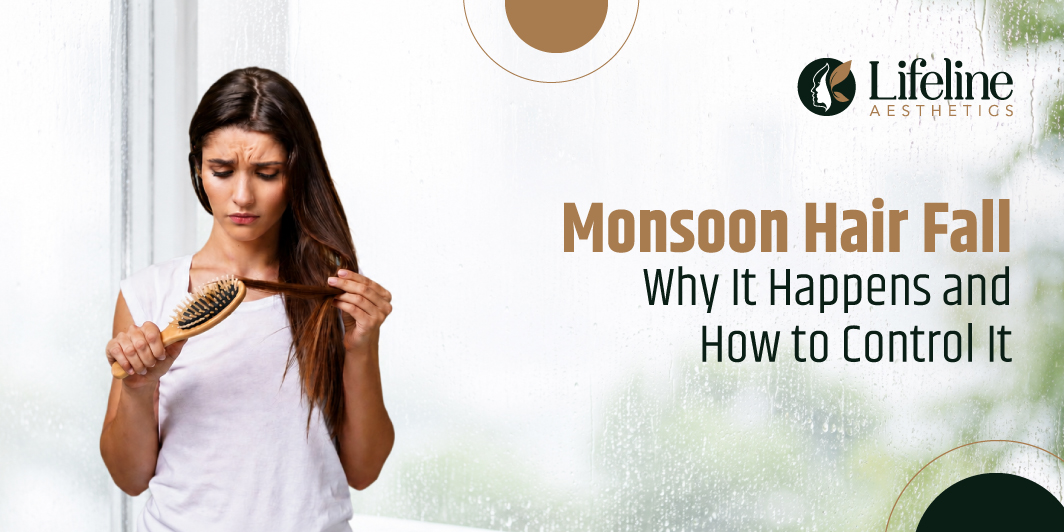
You may have noticed it already. A few extra strands on your comb. More hair than usual on your pillow in the morning. Or maybe you saw it swirling around the bathroom drain and paused for a second, wondering if something is wrong.
As the monsoon sets in, hair fall becomes one of the most common concerns we hear at Adhikari Lifeline Cosmetics Centre. Every year, many people notice their hair shedding more than usual and start wondering whether it’s just a seasonal change or a sign of an underlying problem. It can feel worrying, especially if you already take good care of your hair. Before you worry, know that monsoon hair fall is common, and in most cases, it can be managed once you understand what is really going on.
Let’s understand what hair fall really is and why monsoon affects your hair the way it does.
What is hair fall?
Hair fall is a natural part of your hair’s growth cycle. On an average day, losing about 50 to 100 hair strands is completely normal. As older hairs shed, new hairs gradually begin growing from the same follicles. Excessive hair fall happens when you lose noticeably more than this, or when you start seeing thinning patches, a widening parting, or slower regrowth.
The difference matters. Daily shedding is your scalp doing its job. Excessive fall is your scalp asking for attention.
Does hair fall increase during monsoon?
Yes. It is common to notice increased hair fall during the monsoon. If the shedding is excessive or continues beyond the season, it is advisable to consult a hair specialist in Boisar or near you to identify the underlying cause. It is not just in your head. The season itself plays a real role in how your scalp behaves.
HEAR what our expert doctors say about Hair fall
Why does hair fall increase in the rainy season?
Hair fall increases during the rainy season because high humidity, excess sweating, scalp infections, dandruff, fungal growth, and an oily scalp can affect the health of your scalp and hair roots. Nutritional deficiencies, stress, and existing hair conditions may also contribute to increased hair shedding during monsoon.
Humidity causes the scalp to sweat more, creating a warm and damp environment where fungi and bacteria can grow easily. This can lead to itching, dandruff, and scalp irritation. If your scalp is already oily, it may become harder to keep clean, allowing dirt and excess oil to build up around the hair follicles.
Rainwater mixed with dust and pollutants can also irritate the scalp if your hair is not cleaned properly after getting wet. At the same time, poor nutrition and stress may weaken your hair from within, making seasonal shedding more noticeable. If you already have conditions like dandruff or pattern hair loss, monsoon can make them appear worse.
Can hair grow back after falling out?
Yes. If your hair fall is linked to seasonal changes, it usually settles down on its own once monsoon passes, and new hair grows back naturally within a few months. However, if the shedding continues for a long time, or if you notice thinning that does not improve, it is best to get it checked. Early diagnosis genuinely improves treatment outcomes, so do not wait too long if things do not feel normal. If hair fall does not improve, a hair specialist may recommend medication, supplements, or cosmetics treatments like PRP or PRF.
In which month does hair fall most in India?
In India, many people notice the highest shedding between July and September, when monsoon is at its peak across most parts of the country. That said, this can vary from person to person, depending on your scalp type, local climate, and overall health.
How to reduce hair fall during monsoon?
A few consistent habits can make a real difference in reducing hair fall. Here is what actually helps during the rainy season.
Keep your scalp clean and dry
- Wash your hair regularly to remove sweat, humidity buildup, and everyday pollutants.
- Do not let your scalp stay damp for long, since a moist scalp attracts fungal growth and dandruff.
- If you get caught in the rain, rinse your hair with clean water as soon as you can.
Dry your hair properly
- Always dry your hair fully after washing it or after getting wet in the rain.
- Avoid tying your hair while it is still damp, since wet roots are weaker and break more easily.
- Use a soft towel to pat your hair dry instead of rubbing it harshly.
Focus on your diet
- Eat protein rich foods like eggs, lentils, dairy, and nuts, since protein is the building block of healthy hair.
- Pay attention to your iron and Vitamin D levels, as deficiencies in either often show up as increased hair fall.
- Include seasonal fruits and vegetables to support your overall nutrition during monsoon.
Choose gentle hair care practices
- Use a mild shampoo suited to your scalp type instead of harsh, sulphate heavy products.
- Avoid chemical treatments such as colouring, straightening, or perming during this season, since monsoon already weakens hair strands.
- Oil your scalp gently, but wash it off properly to prevent buildup.
Manage stress and stay hydrated
- Try simple daily routines like light exercise, breathing techniques, or a consistent sleep schedule to manage stress, since stress can make monsoon hair fall worse. Stay hydrated throughout the day, as water supports scalp health and overall hair strength.
Together, these habits create a scalp environment where hair is less likely to fall and more likely to grow back stronger.
When should you see a Hair Specialist?
See a hair specialist if your hair fall lasts more than two to three months, or if you notice bald patches, itching, scaling, or a painful scalp. Sudden excessive shedding, visible thinning, or a family history of baldness are also good reasons to get a professional opinion. Timely consultation makes treatment easier and more effective. Our hair specialists in Boisar can diagnose the cause of your hair fall and recommend the most suitable treatment.
Take Care of Your Hair This Monsoon
Monsoon can be tough on your hair, but it does not have to control your confidence. With the right care and timely cosmetic treatment, most seasonal hair fall can be managed well. At Adhikari Lifeline Cosmetics Centre, Boisar, Palghar, our experienced cosmetic specialists understand exactly how this season affects hair. We offer personalised diagnosis and advanced hair fall treatment in Boisar, designed to keep you looking and feeling your best, no matter what the weather brings.
If your monsoon hair fall has been worrying you, do not wait for it to get better on its own. Book a consultation with our hair specialists in Boisar today to understand the cause of your hair fall and receive a personalised treatment plan.
Leave A Comment