

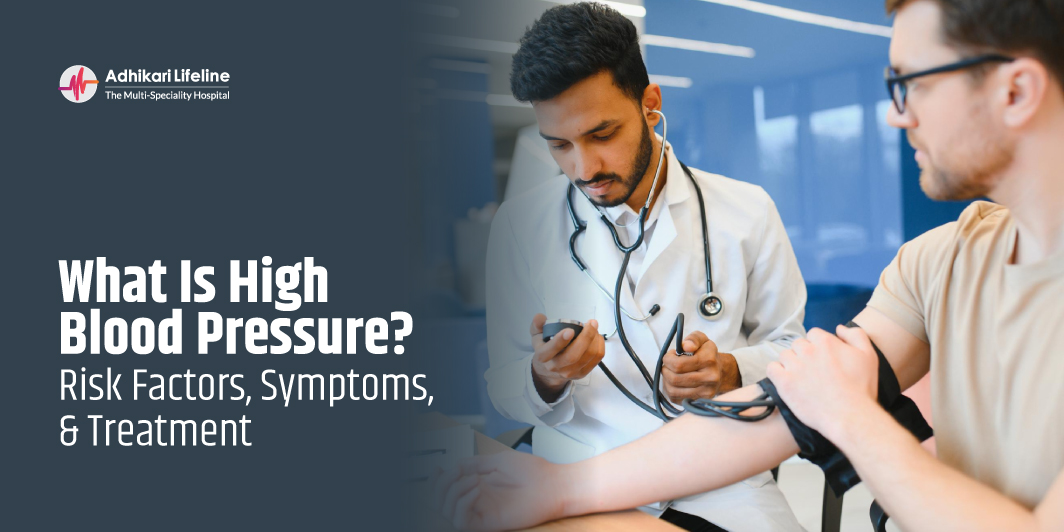
Saurabh walked into his office for a routine health checkup, expecting nothing more than a formality before his annual appraisal. He felt fine. No headaches, no fatigue, nothing out of the ordinary. But when the nurse wrapped the cuff around his arm and took the reading twice, her expression changed.
His blood pressure was 160/100.
At Adhikari Lifeline Hospital, the best multispeciality hospital in Boisar, we see stories like this almost daily. High blood pressure rarely announces itself. It builds quietly in the background, sometimes for years, while a person carries on with daily life feeling completely normal. That silence is exactly what makes it dangerous, and exactly why regular monitoring matters so much, even when you feel perfectly healthy.
What Is High Blood Pressure?
Blood pressure is simply the force with which blood pushes against the walls of your arteries as your heart pumps it around the body. A normal reading sits around 120/80 mmHg. When that pressure stays consistently at 140/90 or higher, doctors call it hypertension.
Think of it this way: your arteries are like pipes, and your heart is the pump. When the pressure inside those pipes stays too high for too long, it puts extra strain on the heart and slowly damages the artery walls. Over time, this raises the risk of heart disease, stroke, and kidney problems, which is why catching it early makes such a big difference.
What Causes High Blood Pressure?
There is rarely just one cause. Most cases develop from a mix of lifestyle habits and underlying health factors working together.
Causes of high blood pressure commonly include a sedentary lifestyle, excess body weight, and a diet heavy in salt. Genetics play a role too. If your parents or siblings have hypertension, your own risk goes up. Age is another factor, since arteries naturally stiffen as we grow older. However, blood pressure can affect children too!
Chronic stress, smoking, and regular alcohol consumption also push blood pressure upward. And conditions like diabetes and kidney disease often go hand in hand with hypertension, each one making the other harder to control.
What Are the Symptoms of High Blood Pressure?
Here’s something worth knowing: most people with high blood pressure feel absolutely nothing. That’s precisely why it has earned the nickname “the silent killer.”
When hypertension symptoms do appear, it usually means the pressure has already climbed to a dangerous level. These can include:
- Severe headaches
- Dizziness
- Blurred vision
- Chest pain
- Breathlessness
- Unexplained nosebleeds
- Constant fatigue
Many people don’t realize that by the time these signs show up, the condition may already need urgent attention. That’s why doctors, especially heart specialists, recommend checking your blood pressure regularly instead of waiting for symptoms.
Who Is at Higher Risk of High Blood Pressure?
Certain groups face a noticeable hypertension risk factors and higher chance of developing it.
Age above 40, a family history of the condition, and carrying extra body weight all raise your risk. So does a sedentary routine, a diet loaded with salty or processed food, diabetes, smoking, and heavy alcohol use. Chronic stress and poor sleep quietly add to the burden too, often without people connecting the dots.
If several of these apply to you, it’s always better to catch it early with regular checkups rather than wait for a warning sign.
What Happens If High Blood Pressure Is Left Untreated?
Left unchecked, hypertension doesn’t stay confined to just your arteries. It gradually affects nearly every major organ in the body.
High BP complications include heart attack, stroke, heart failure, kidney damage, vision loss, and in severe cases, damage to brain function. The heart works harder than it should for years, arteries weaken, and organs that depend on healthy blood flow start to suffer.
This is exactly why hypertension should never be brushed aside as “just a number.” The consequences build silently, but they build steadily.
How Is High Blood Pressure Diagnosed?
Diagnosis starts with something simple: a blood pressure measurement, usually taken more than once to confirm the reading is consistent and not a one-off spike from stress or a rushed morning.
Doctors often recommend home monitoring over a few days for a clearer picture. Depending on your overall health, they may also suggest an ECG, blood tests, kidney function tests, and a heart evaluation to understand whether the condition has already affected any organs.
What Is the Best Treatment for High Blood Pressure?
Hypertension treatment usually combines lifestyle changes with medical care, and the two work best together rather than as alternatives.
On the lifestyle side, eating healthier, cutting down on salt, staying physically active, managing weight, reducing stress, sleeping well, quitting smoking, and limiting alcohol all make a real difference over time.
When lifestyle changes aren’t enough on their own, doctors prescribe medicines to bring blood pressure under control. Regular follow ups matter here, since dosages sometimes need adjustment. And this is important: never stop or change your medication on your own, even if you start feeling fine. Hypertension can return quietly if treatment is interrupted.
How To Control High Blood Pressure?
A few consistent habits go a long way in keeping your blood pressure under control, in a healthy range.
- Cut back on salt and processed foods
- Stay physically active most days of the week
- Maintain a healthy body weight
- Manage stress through activities you enjoy
- Get enough quality sleep
- Avoid smoking and limit alcohol
- Go for regular blood pressure checkups, even without symptoms
When Should You See a Doctor for High Blood Pressure?
Consult a doctor if you notice blood pressure warning signs such as consistently high readings, chest pain, severe headaches, sudden vision changes, difficulty breathing, or unexplained weakness. Don’t dismiss these as minor. Getting checked early often prevents a much bigger problem later.
Take Charge of Your Blood Pressure
You know, the best part is that high blood pressure is manageable, often very effectively, once it’s identified and treated properly. The key lies in not waiting for symptoms to force your hand.
At Adhikari Lifeline Multispeciality Hospital, Boisar, our team of experienced doctors and cardiologists is equipped with modern diagnostic facilities to help you understand exactly where you stand. From accurate blood pressure monitoring to complete cardiology consultations and heart health screenings, we focus on diagnosing blood pressure and related health problems early and guiding you toward long term heart health with care that feels personal, not rushed.
If it has been a while since you last checked your blood pressure, or if you have noticed any of the warning signs mentioned above, don’t put it off any longer. Book a consultation at Adhikari Lifeline Multispeciality Hospital today, and take a simple step toward a healthier heart.
Leave A Comment